T-Mobile owns delivery. The hospital owns judgment.
CareLink shows connection health, provenance, and evidence readiness—not diagnoses, care plans, or a competing patient record.
- Device identity
- Pairing and transport
- Freshness and completeness
- Source health
- Clinical review
- Patient context
- Charting in Epic
- Outreach and care change
source → observation → hospital workflowThis write-up focuses on Data Sources.
Patient experience and the patient chart stay first-class, as do last-mile and hospital dashboards. This is where device, merchant, API, and 5G-path complexity show up in one place: how instruments from different vendors become a readable packet, and how connection health looks on the patient side and the clinician side.
How the API is used
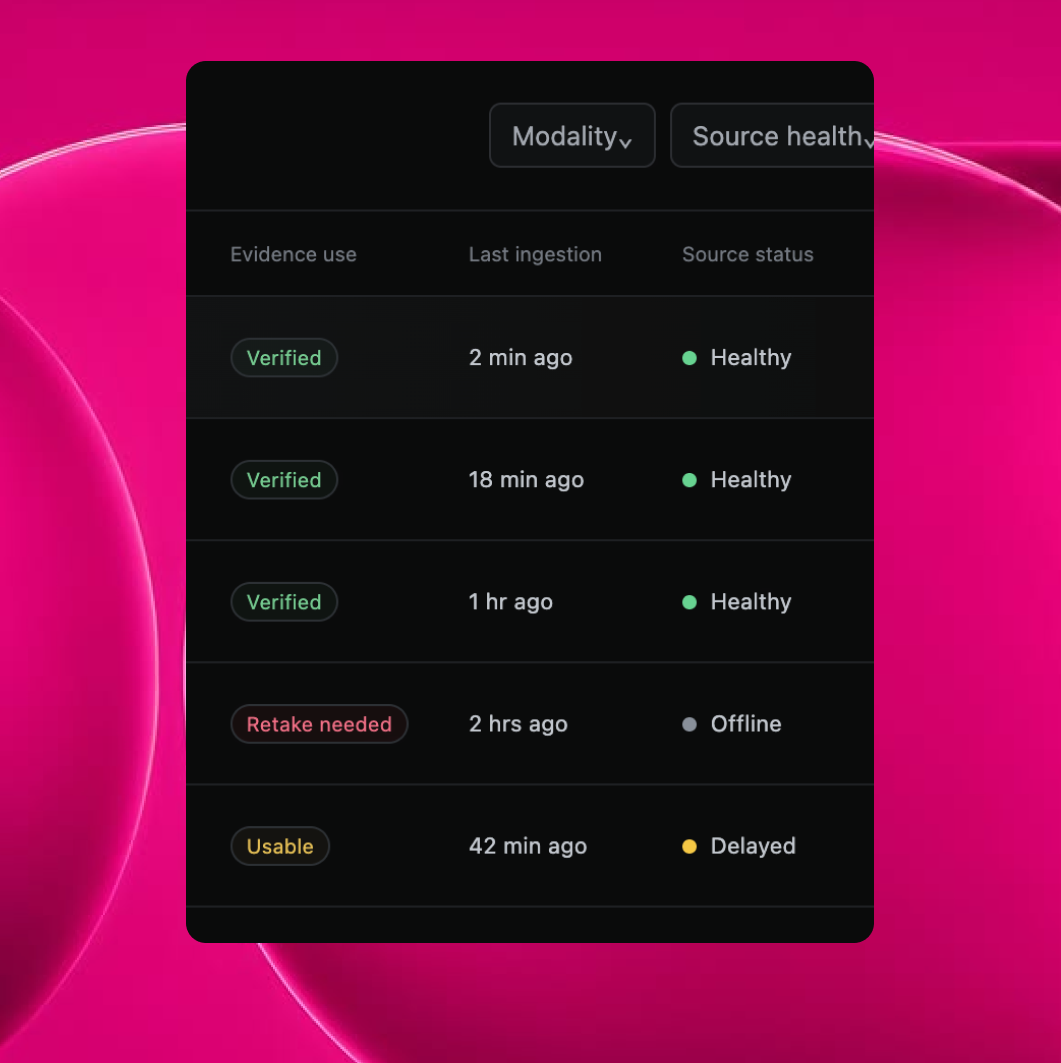
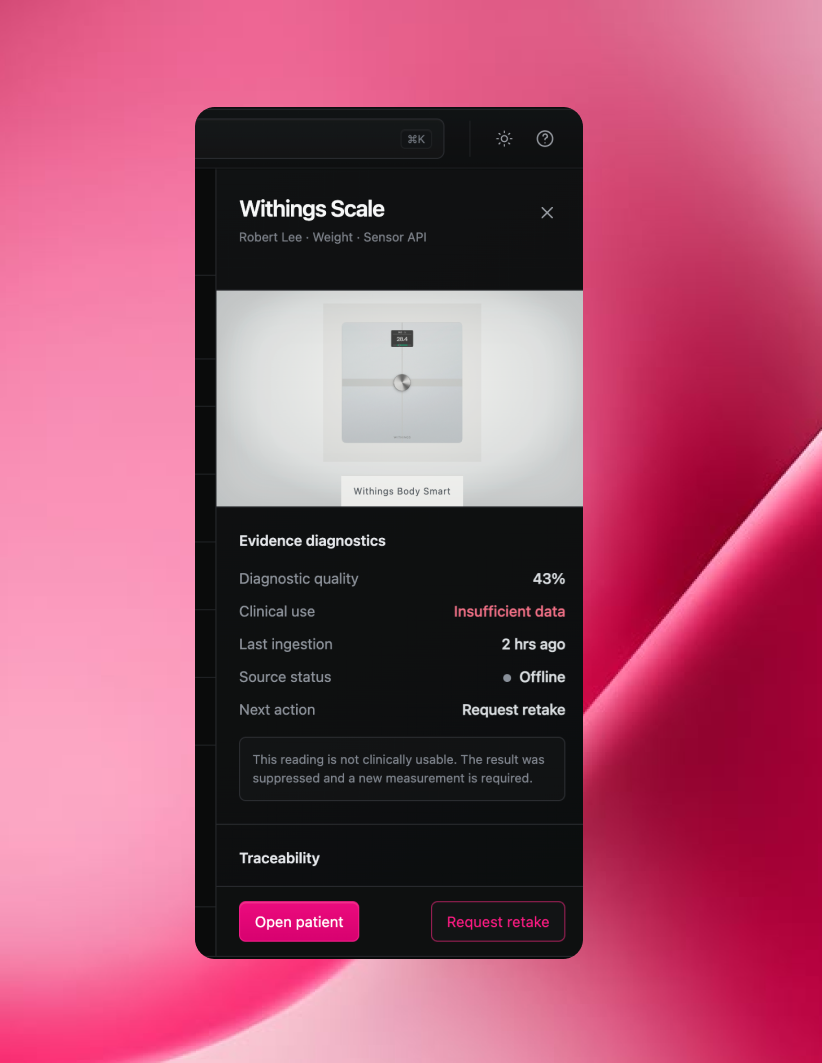
The raw record is never discarded. The scan publishes three packet states.
Complete, fresh, source healthy. Omron in the table is this row.
Enough to read. Delayed SpO₂ stays Usable, not “stable patient.”
Insufficient data or an offline source. The Withings drawer is this row.
Appearance
Top half of each cell is LCH. Bottom half is HSL at the same lightness. Hover a column to lock L.
- Magenta is the verb. A status row never wears it.
- Compare hues at the same L, or green looks calmer than gold when it isn’t.
- Dark is last-mile ops. Light is the ward. Surfaces swap; the four roles don’t.
const roles = {
  action:  'lch(48% 76 354)', // #E20074
  healthy: 'lch(62% 48 145)', // #68d391
  delayed: 'lch(74% 58  82)', // #f6c945
  offline: 'lch(60%  8 285)', // #8a8f98
}

style={{
  ...roles,
  '--bg':  mode === 'dark' ? 'lch(8% 3 285)' : 'lch(97% 2 285)',
  '--ink': mode === 'dark' ? 'lch(96% 2 285)' : 'lch(18% 4 285)',
}}
Theme only swaps the paper. The four roles stay.
Insights was one page. It should have been two dashboards.
The old page mixed two jobs. Split them: T-Mobile watches whether the kit is still on the 5G path; the doctor watches who needs a look this week. If the path looks wrong, you open the kit—that’s the third picture, not a third owner.


