↓
Scroll to explore
CareLink Implementation → Kit, evidence path, and live prototype.
Overview
What is Carelink and what did I do there?
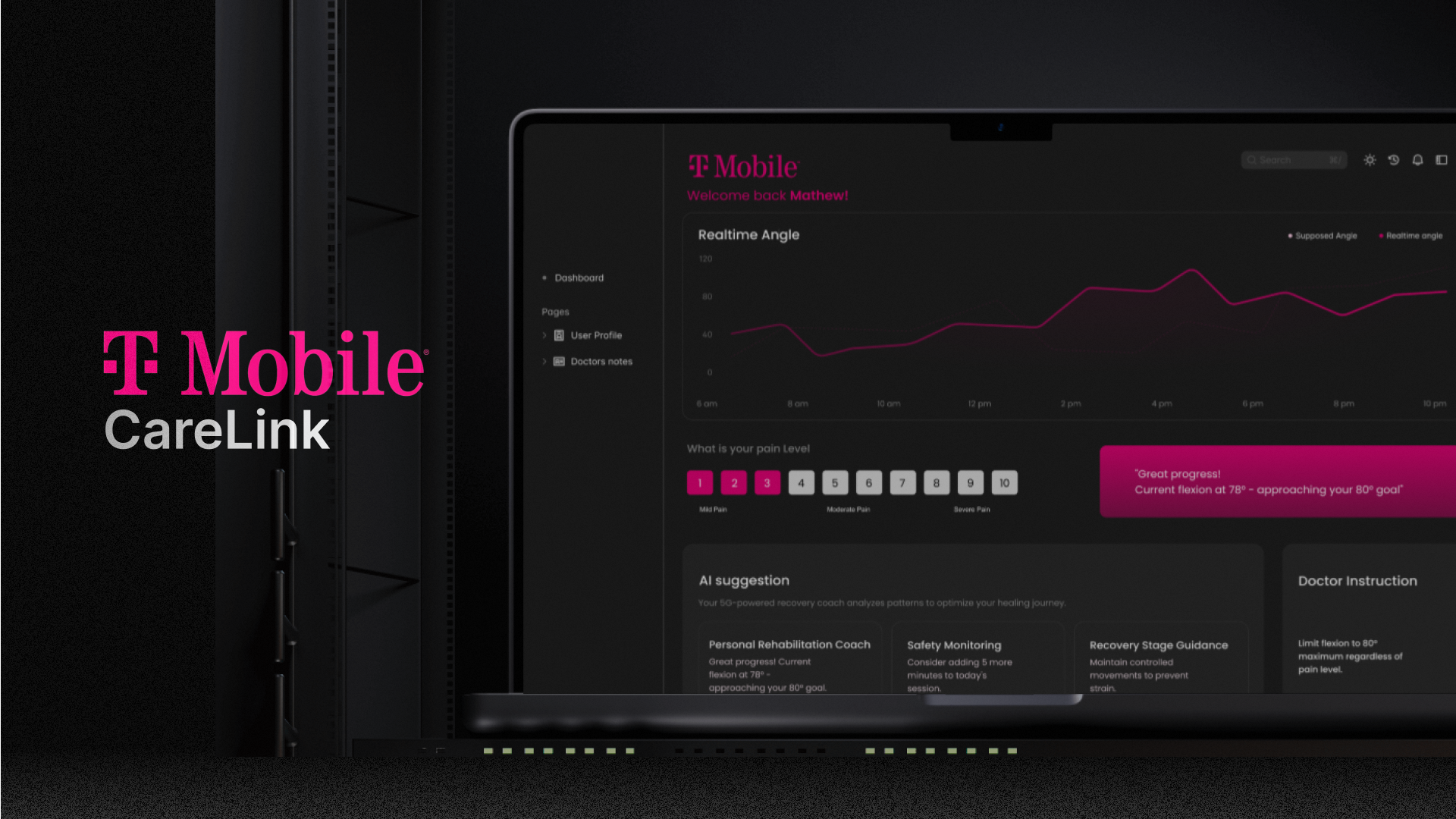
Carelink is a 5G-enabled wearable system that provides intelligent, adaptive ACL rehabilitation at home. It combines motion sensors, real-time ML guidance, and remote clinician monitoring to bridge the gap between hospital care and home recovery.
My Role & Contributions
As the product designer for this project, I led:
- The overall user experience architecture of the system
- Interaction flows and visual design for both patient and clinician interfaces
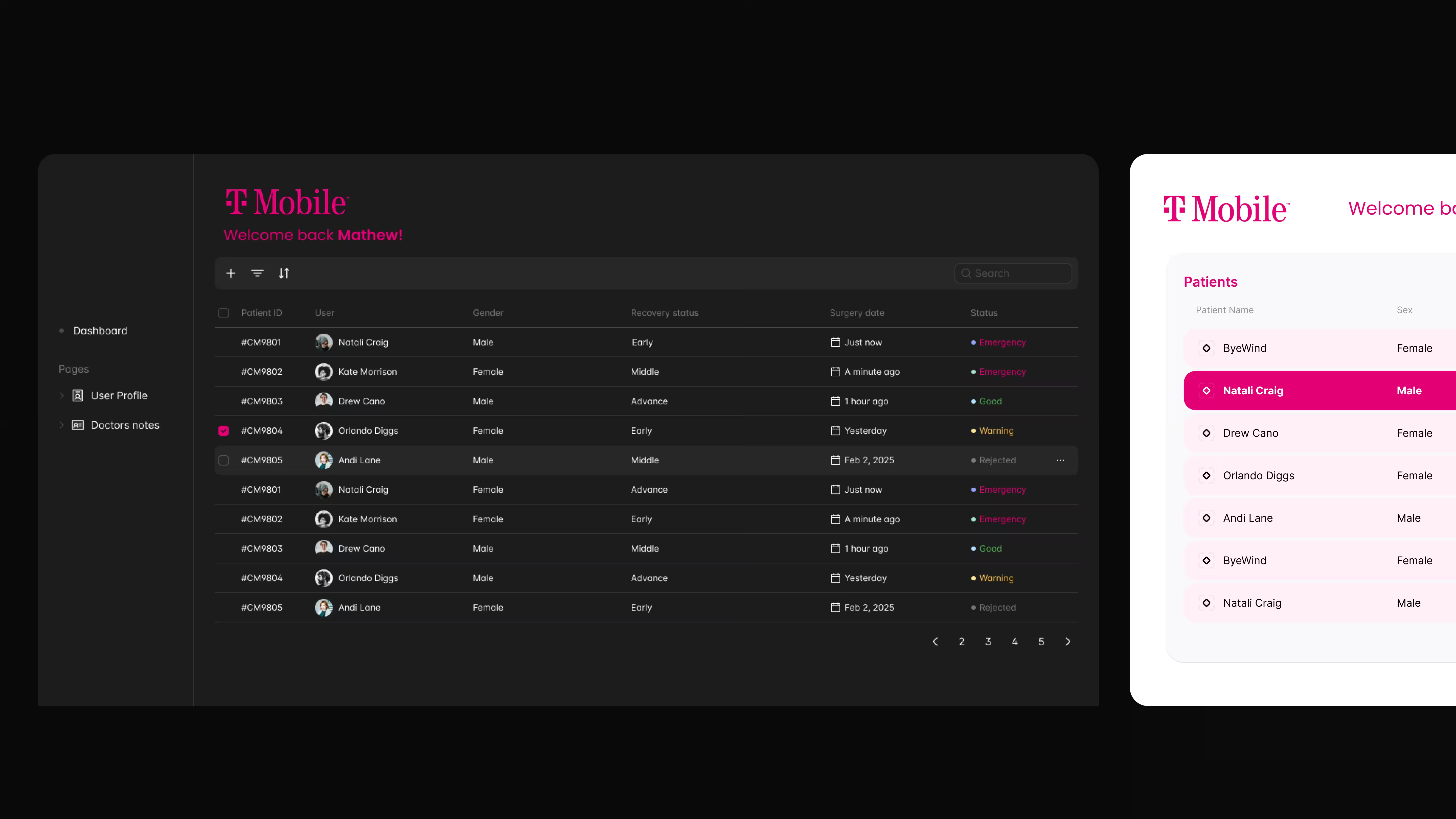
- Particularly focused on the clinician web UI/UX for displaying patient feedback and cloud analytics data
Current rehab tools fall into extremes: powerful but inaccessible, or affordable but passive
Solution
Cost
Intelligence
Home Use
Cyberdyne HAL
$96K
●●●
●
Tyromotion
$120K
●●●
●
MindMaze VR
$3.5K
●●
●●
Consumer Braces
$500
●
●●●
Carelink (Target)
<$100
●●●
●●●
●●●
High
●●
Medium
●
Low
Carelink bridges the gap: clinical-grade intelligence at consumer-friendly cost
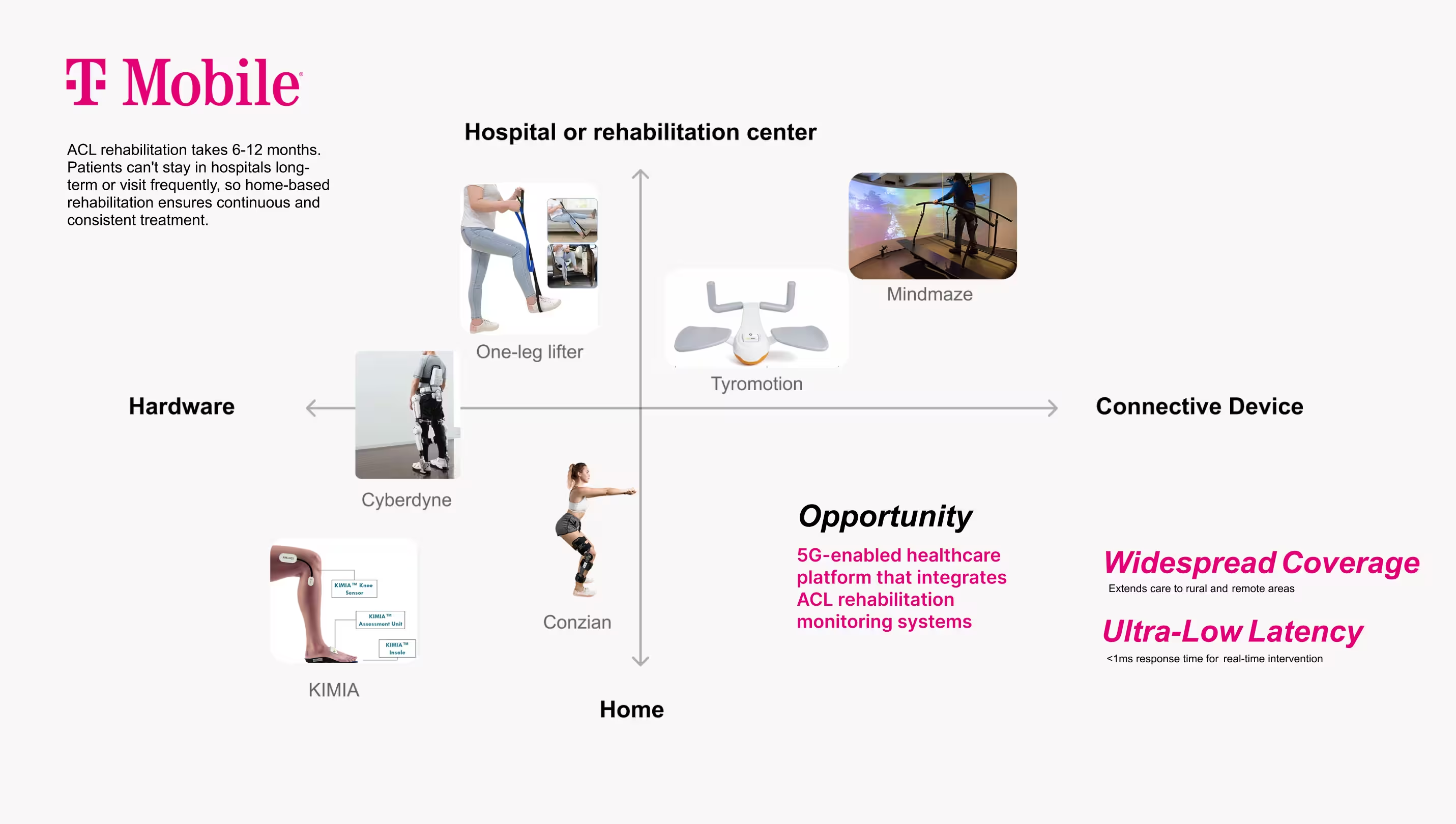
Identifying gaps in current rehab solutions
Context
Why Carelink? What problem were we trying to solve?
Current rehab tools fall into two extremes: clinic-bound systems that cost $90K+ or basic aids under $500 with no intelligence. Patients lack guidance at home, while doctors have no visibility between visits.
We saw an opportunity to bridge this gap with 5G-enabled, adaptive technology that brings clinical-grade intelligence to home recovery.
ACL rehab still depends on static routines and subjective check-ins
We mapped 8+ rehabilitation tools and found clear gaps:
Real-time adaptability
Most tools use static routines that can't adjust to patient progress
Clinician-patient communication
Limited real-time feedback between therapy sessions creates blind spots
Long-term home-based use
Existing solutions aren't designed for sustained daily use outside clinical settings
Cost-accessibility and scalability
High-quality tools are expensive; affordable options lack intelligence
Carelink's Mission
Build a system that listens, adapts, and learns—at home, in real time
Making intelligence simple—and simple feel intelligent

System architecture: Edge-cloud integration with 5G connectivity
The Product
Carelink is a wearable rehab system with motion sensors and real-time ML guidance. It combines local processing with 5G cloud intelligence to provide adaptive exercise recommendations and remote clinician monitoring.
Designed for home use: portable, affordable, and clinically relevant.

Doctor Page
Comprehensive patient monitoring and assessment tools

Patient Portal Page
Interactive patient experience with real-time guidance
Carelink seamlessly integrates wearable sensors, machine learning, and intuitive dashboards
Wearable Hardware
Lightweight brace with dual MPU6050 sensors, ESP32 microcontroller, and OLED display for real-time feedback.

Hardware design iteration 1

Hardware design iteration 2
Hardware design iterations showing sensor placement and form factor development


Clinician Dashboard
Firebase-powered interface showing patient progress, pain trends, and recovery analytics for remote monitoring.
We created a system that outperforms, out-reaches, and out-learns existing solutions
Impact
What changed because of Carelink?
Unlike most tools that only monitor or only guide, Carelink does both—in context, in real-time, and with minimal intrusion.
Outperformed
basic tools in accuracy
Out-reached
hospital systems in accessibility
Out-learned
static devices by evolving with each session
Patients gained confidence and clarity during exercises. Doctors could finally see real progress instead of relying on vague phone calls or delayed visits.
Performance metrics showing system effectiveness
Final presentation demonstrating Carelink's real-time adaptation and clinical integration capabilities.
Designing for bodies in transition taught me to think beyond features—to recovery itself
Thoughts & Reflections
Product Design for Recovery
This project taught me to think not just about features—but about recovery itself. What does it mean to heal safely? How can design lower anxiety, not just friction? How do we design for bodies in transition? These became the real design questions.
Building at the Edge
Working with edge devices and 5G offloading gave me new perspective on latency, offline fallback, and distributed computing. Every design decision had to consider bandwidth, memory, and real-world noise.
Collaborating Across Disciplines
Carelink required hardware integration, machine learning, patient research, and system architecture—all connected through design. I learned how to ask better questions, translate needs across teams, and push for coherence without oversimplifying complexity.